This Patient’s Last Visit Notes. Can You Read Them?
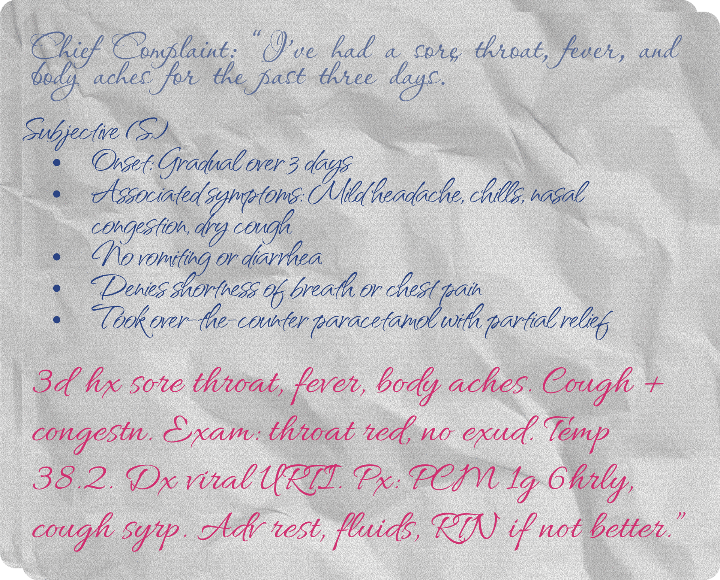
Raw notes from a real consultation. We also have no idea what this says.
These are actual consultation notes from a patient's visit last week. The doctor who wrote them knows exactly what they documented. But if that doctor isn't available when this patient returns for a follow-up, can anyone else make sense of this?
For most clinics, the answer is no. And that's a serious problem for patient care.
The Reality of Rotating Doctors and Fragmented Care
Modern healthcare doesn’t run on fixed schedules anymore. Your clinic likely operates with:
- Locum doctors rotating in and out
- Staff doctors on shifting schedules
- Specialists available only on certain days
- Patients who can’t always see the same provider
But one thing hasn’t changed patients still expect continuous, coordinated care, no matter who’s on duty.
When records are handwritten, incomplete, or scattered across paper files, continuity collapses.
What Happens When Doctor B Can’t Read Doctor A’s Notes
Here’s how it usually plays out:
A patient visits with persistent headaches. Doctor A examines them, suspects stress-related tension, prescribes medication, and writes detailed notes on paper.
Two weeks later, the patient returns but Doctor A isn’t on shift. Doctor B takes over, opens the file, and sees this:
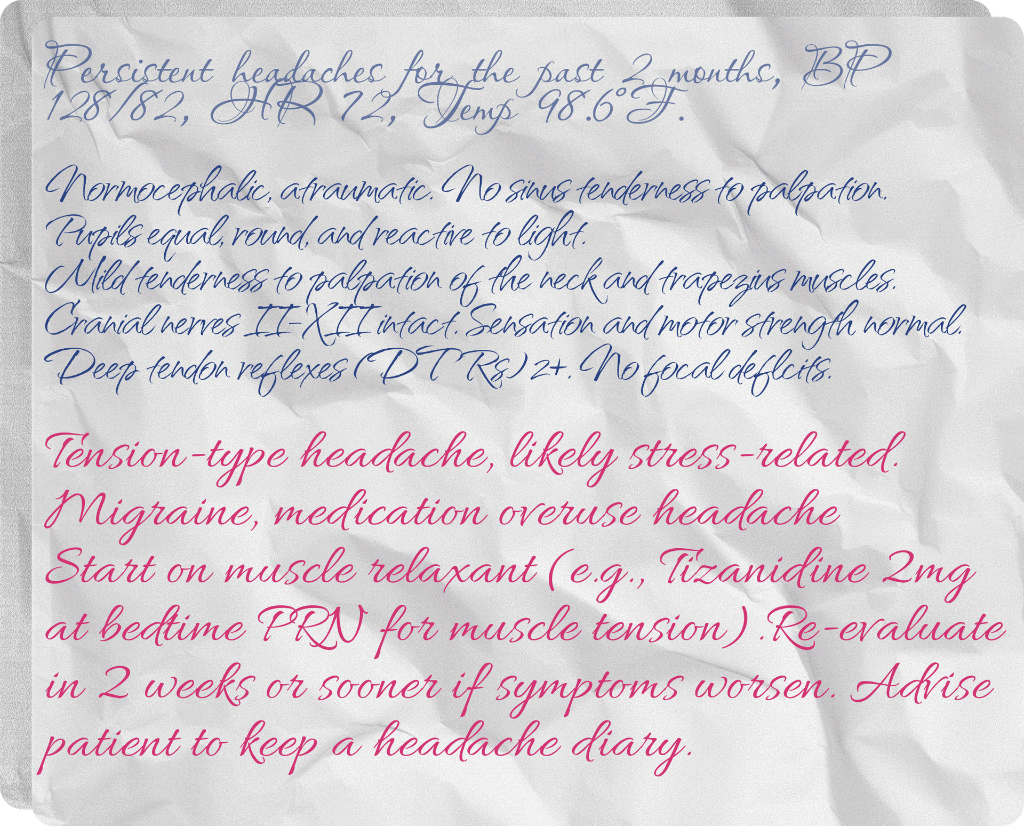
Now what?
Doctor B has three choices:
- Spend ten minutes trying to decode handwriting (and still miss details)
- Ask the patient to repeat everything
- Start from scratch and hope nothing critical was missed
None of these are good for the patient. Or the clinic.
The Hidden Cost of Poor Continuity
When one doctor can’t access clear, complete records, the ripple effects are serious:
- Patients repeat their story at every visit, losing confidence in your clinic.
- Drug allergies and diagnoses get missed.
- Treatment plans become inconsistent or duplicated.
- Tests are repeated, wasting time and money.
- Medical errors become more likely.
- And slowly, patient trust erodes.
This isn’t just inefficiency it’s a safety risk.
How Electronic Health Records Enable True Continuity
An Electronic Health Record (EHR) changes this completely.
Let’s replay that same scenario this time, with digital records.
Doctor A documents everything digitally: symptoms, diagnosis, medications, and follow-up plan all structured and saved in the patient’s file.
Two weeks later, Doctor B logs in and instantly sees:
- The last consultation notes
- Medications and allergies
- Past diagnoses and lab results
- The recommended follow-up plan
No guessing. No repetition. No missed context.
Doctor B picks up exactly where Doctor A left off.
This is the foundation of coordinated, continuous care and it’s what Prescribed Systems was built to deliver.
If You Rely on Locum Doctors, Continuity Isn’t Optional
Locum doctors are often excellent clinicians. But they don’t know your patients, your routines, or your shorthand.
Without digital records:
- They spend time searching for files
- They can’t read other doctors’ handwriting
- They miss key details patients assume you already know
With an EHR like Prescribed Systems:
- They access full patient histories instantly
- See every diagnosis, prescription, and lab result
- Continue treatment plans seamlessly
- Deliver consistent care from day one
Continuity stops depending on who’s available and starts depending on how connected your records are.
Beyond Legibility: What Modern EHRs Actually Enable
Readable notes are only the beginning. A modern EHR transforms how your clinic operates:
| Paper Notes | Digital Records |
| Illegible handwriting | Clear, searchable documentation |
| Scattered files | Unified patient timeline |
| Doctor-dependent knowledge | Team-wide visibility |
| No audit trail | Full accountability |
| Missed follow-ups | Smart reminders and alerts |
What Good Continuity Looks Like in Practice
Here's what changes when your clinic moves from paper chaos to digital clarity:
A patient with diabetes comes in every month for monitoring. Each visit, whichever doctor sees them has instant access to their last three blood sugar readings, medication adjustments, and dietary recommendations. Care builds progressively instead of restarting each time.
A locum doctor covers the evening shift. A patient presents with chest pain. The locum immediately sees their cardiac history, current medications, and recent ECG results. They can make informed decisions without delay.
A child comes in for a follow-up on an ear infection. The nurse practitioner sees that Doctor A prescribed antibiotics two weeks ago. The parent mentions the symptoms haven't improved. The NP can adjust the treatment plan immediately based on complete information.
A patient calls with a question about their prescription. The receptionist pulls up their record and can see exactly what was prescribed, by whom, and when without hunting through filing cabinets or calling the doctor.
This is what continuity actually looks like. And it's only possible when your records are digital, structured, and accessible.
Making the Shift from Paper to Digital
Many clinics still use paper because the transition feels daunting.
But the cost of staying there is higher than it seems:
- Time wasted deciphering notes
- Fragmented patient journeys
- Higher risk of medical errors
- Poor coordination among providers
Prescribed Systems is designed specifically for clinics making this leap, helping you go digital without disrupting how you work. You get:
- A clinic-ready EHR that mirrors real workflows
- Full training and local support
- Integrated records, billing, and reporting, all in one place
So you can finally deliver coordinated care, even with rotating teams.
The Bottom Line: Continuity Is Patient Safety
At the end of the day, this isn't just about convenience or efficiency. It's about patient safety.
When doctors can't read each other's notes, patients suffer. When critical information gets lost or overlooked, medical errors happen. When every visit feels like starting from scratch, trust erodes.
Electronic health records solve this. They make continuity possible, even when doctors rotate, schedules shift, and patients see different providers.
Ready to move from illegible notes to coordinated care?
See how Prescribed Systems helps clinics deliver true continuity with an integrated EHR and practice management platform.